
Let’s get one thing out of the way. Awards shows are bullshit.
A self-congratulating industry flies itself to the south of France to hand itself trophies and drink rosé on somebody else’s yacht. Trite, insular, a week of humble-brag selfies dressed up as a celebration of creativity. I’ve watched it happen for twenty-six years and it gets more true every June.
But here’s what they still do: They signal. Strip away the spectacle and an awards show is a room full of the sharpest people in the business agreeing, out loud and on the record, about what was worth making this year. That’s a data point. And this year the data said something worth hearing.
Because this year the data got smaller.
Twenty-seven thousand entries last year. Twenty thousand this year.
Somewhere in there, seven thousand people who used to fight for the most coveted award in this business looked at the entry form and quietly walked away. A quarter of the room. Gone in a single year.
The trades called it belt-tightening. Rising costs, softer budgets, the usual weather. Maybe. But I’ve been in enough rooms that should have died and didn’t to know the difference between a place that ran out of money and a place that ran out of reasons to believe in itself.
Here’s what happened. Last year Cannes got caught with fakes in the winners’ circle. So this year they tightened the rules, raised the bar, and told everybody the work would have to be real. And a quarter of the industry took one look at a jury that couldn’t be gamed and stayed home.
Which leaves the work that showed up anyway. No AI spectacle to hide behind. No purpose halo to launder a thin idea. Just the oldest question there is: did it make anybody feel something.
Come look at what won.
The pub that wouldn’t die
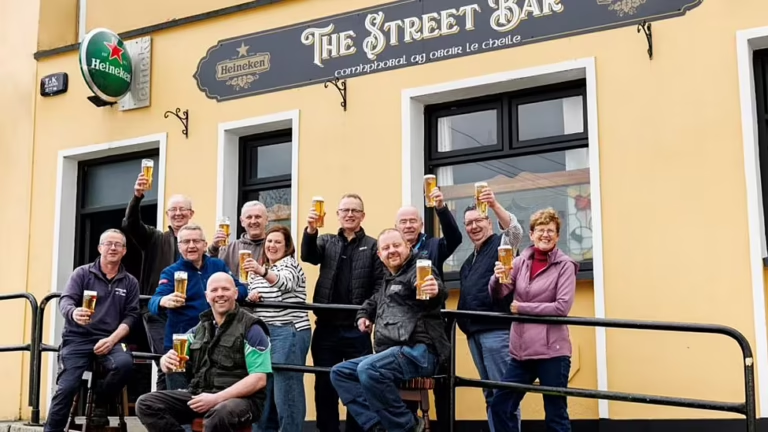
There’s a village in Ireland called Kilteely, and until recently it had one pub left. Ahern’s. The kind of room where the same people have been sitting on the same stools for forty years, and when the last one goes the whole town loses the place it goes to be a town.
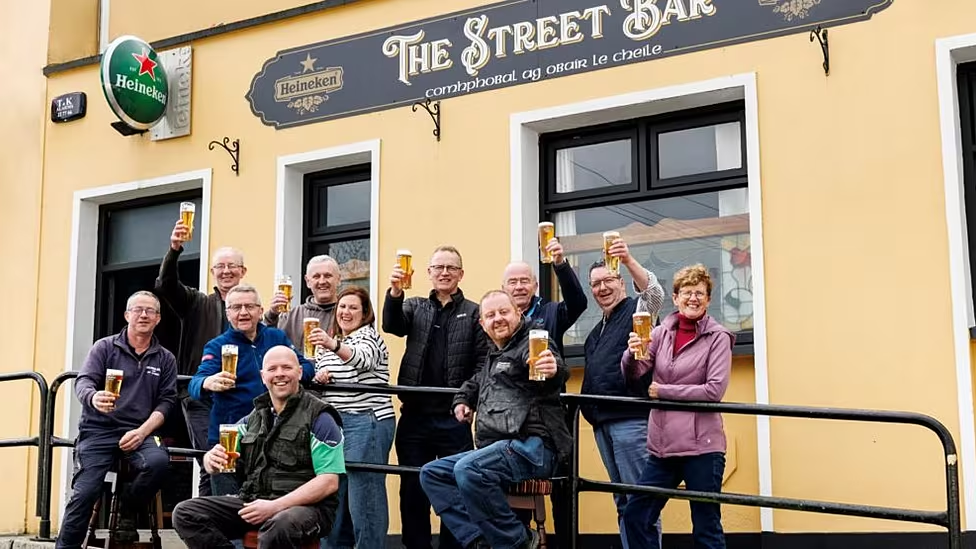
It was going under. So twenty-six locals, none of whom had ever pulled a pint in their lives, bought it. Just bought the thing and kept it open.
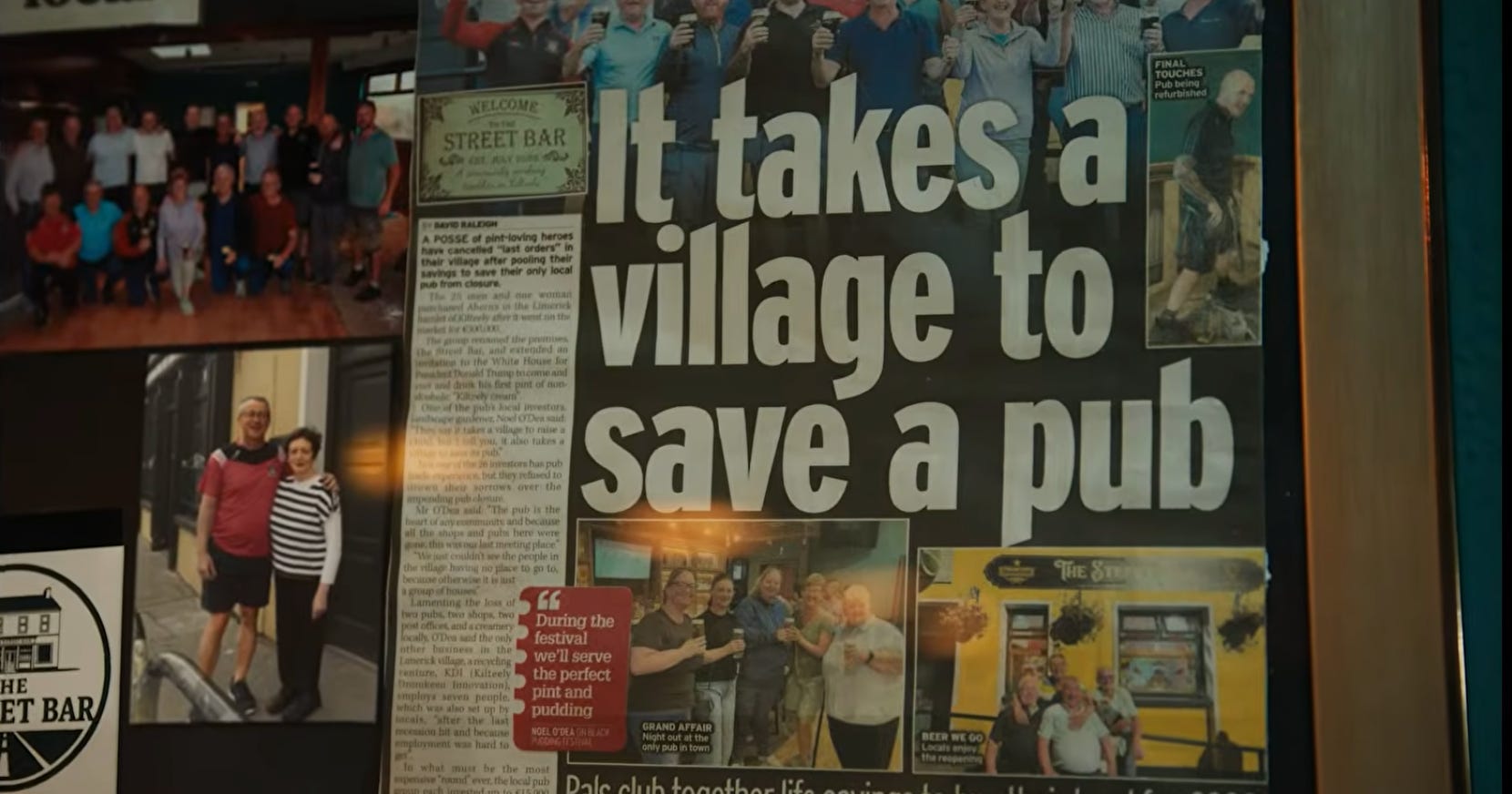
Heineken made a documentary about them and it won the Creative Strategy Grand Prix. And here’s the part I can’t stop turning over. The brand is barely in it. A beer company found the best story it could have told and then had the rare good sense to shut up and point the camera. It’s already talked another village into buying its pub. Two more are trying.
Watch this one first. It works because nobody’s selling you anything. Somewhere a room full of strangers refused to let a place die, and that turned out to move more people than any tagline ever built.
And here’s the receipt. On the strength of the pub and one other film, Cannes named Heineken the Creative Brand of the Year. The single biggest brand title the festival hands out. The most creative company in the room this year built its case on 26 people in a village nobody had heard of. Sit with that for a second.
( Watch Here )
Two dumb questions
Mother London won the Film Grand Prix for two Super Bowl spots for Claude, the AI. One guy wants to know how to get a six-pack fast. Another wants to know how to talk to his mother. That’s the whole thing. The line underneath: Ads Are Coming To AI. But Not To Claude. A knife, slid clean between ChatGPT’s ribs for deciding to sell ad space.
Now sit with the irony, because it’s a good one. This is an ad about a machine, and it won because a human being wrote it. The joke about your mom. The timing. The read on exactly where a competitor left itself open. No algorithm makes those calls. It doesn’t know your mother. It’s never had one.
That’s the whole answer to the AI question everybody keeps asking wrong. The machine is a tool in the kit, same as a lens or a boom mic. The people who understood tone and timing are the ones who walked off with the Lion.
Three words
An insurance company. Stay with me.
AXA won Creative Effectiveness by adding three words to every home policy they carry. And domestic violence. That’s it. Three words that made emergency relocation available to abuse survivors, retroactively, across policies that were already on the books, the same way the paperwork already covered fire and flood. Somebody trapped in a house with the worst person they know got a door, because a copywriter chose three words and meant them.
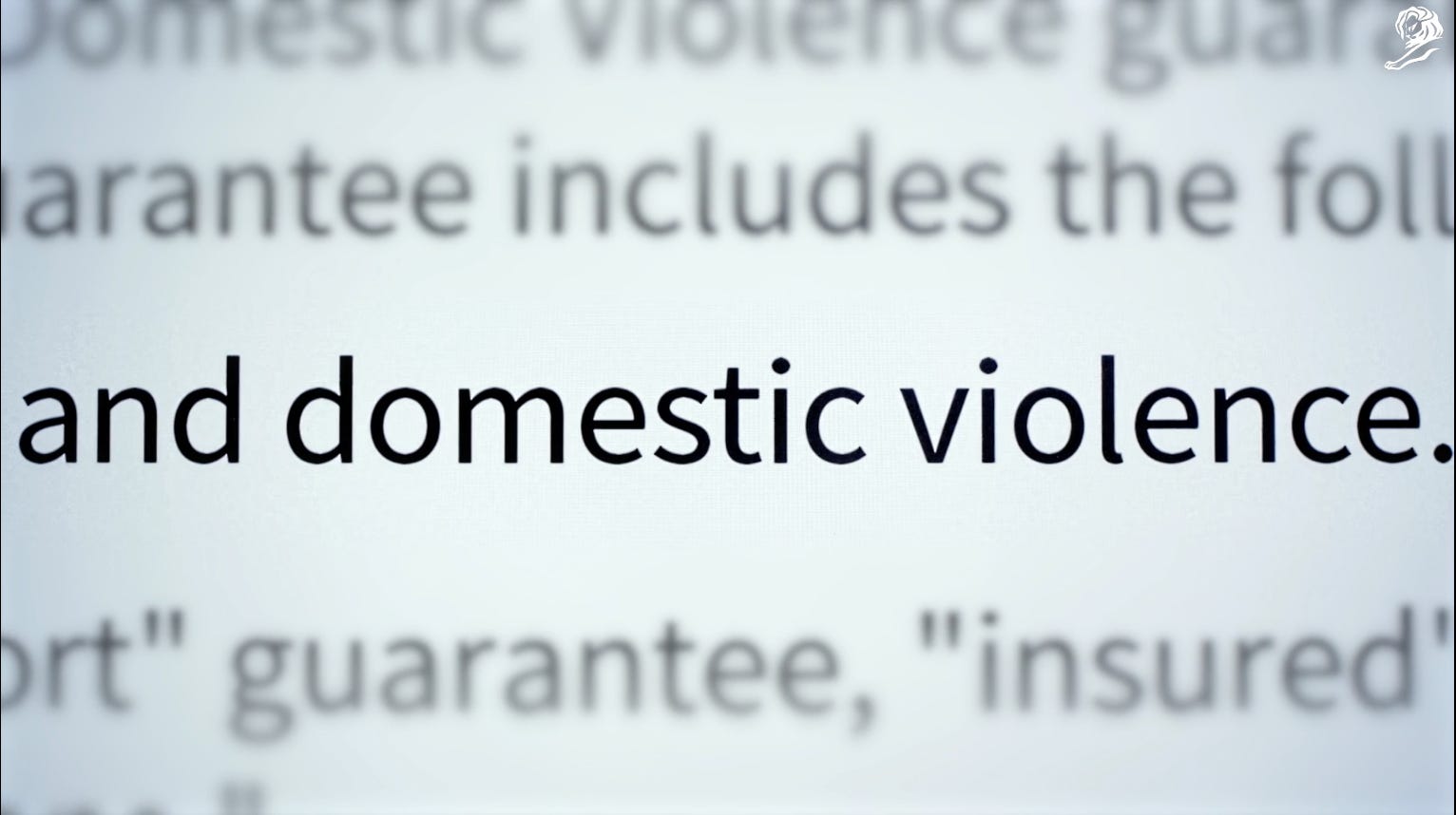
No film. No budget to speak of. The campaign is called Three Words, and the jury treated it like the promotion it is. A brilliant one. That’s the point. The idea was three words long. What sat behind them could fill a life.
Next time somebody tells you the idea has to be big, tell them about the three words.
( Watch Here )
The frog that wouldn’t shut up
Some tourist went on Reddit and asked how to make Puerto Rico’s coquí frogs be quiet. The coquí. The sound of the island. The thing your grandmother fell asleep to. Asked how to shut it off, like you’d complain about a dripping faucet in a rental.
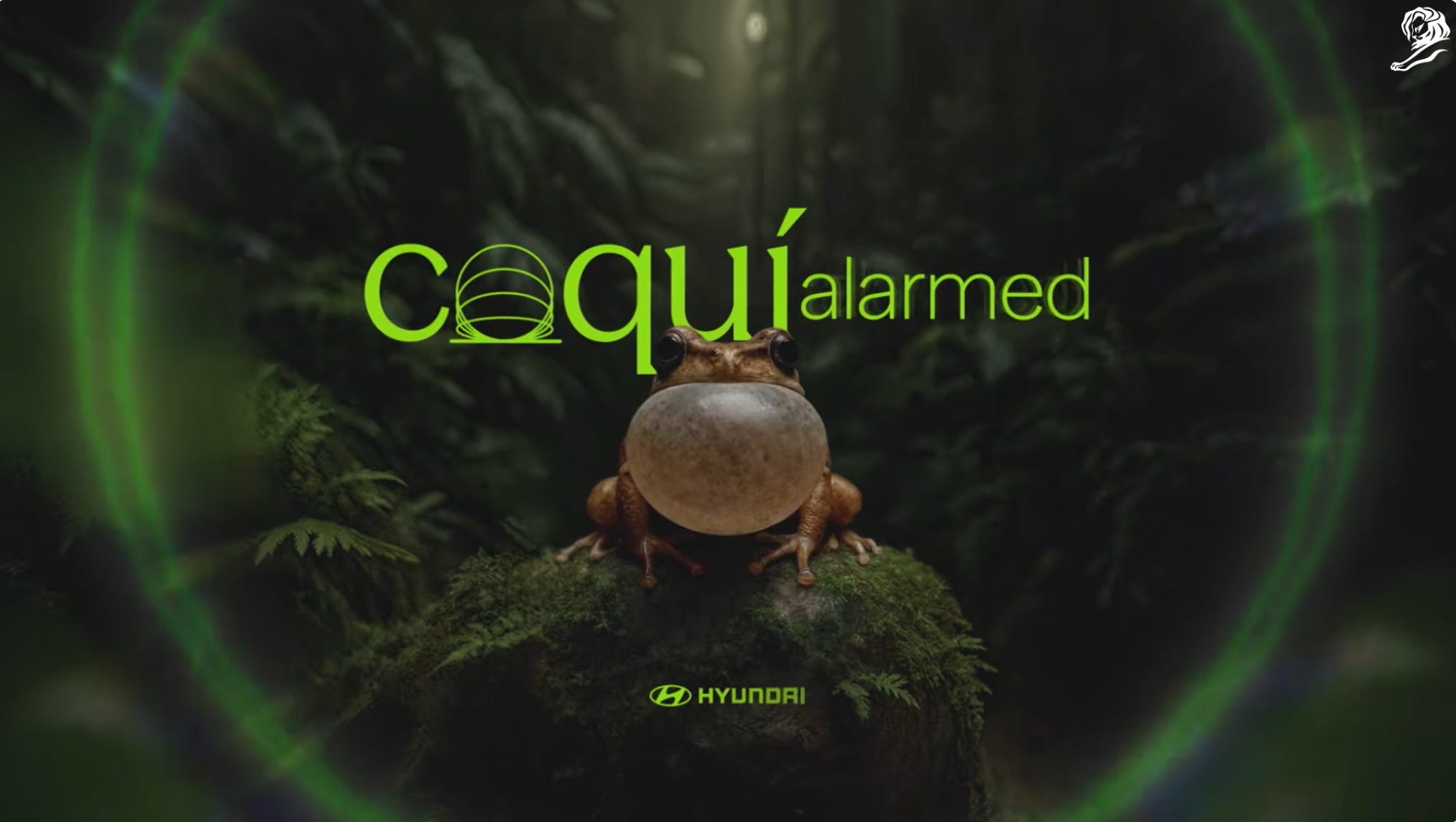
Hyundai Puerto Rico heard that and did something better than get angry. They pulled the beep out of their rental cars and dropped in the actual frog. Won the Audio Grand Prix for it. A complaint about a sound became a whole people saying, quietly and with a grin, this is who we are and you’re a guest here.
Somebody read the temperature of a real moment and flipped an insult into pride. That’s not a media buy. That’s paying attention.
( Watch Here )
What the tape shows
Line them up. A pub. Two dumb questions. Three words on a form. A frog.
Not one of them won on optimization. Not one won on spectacle. Not one won because a machine cranked it out faster or cheaper than a person could. They won because somewhere a human being made a bet about what would land in another human being’s chest, and then had the nerve to keep it simple.
This is the thing we’ve been saying since the beginning. The decision happens before the decision. Feeling runs upstream of logic in every choice a person makes, right down to the choice to hand you a trophy in the south of France.
So here’s the picture. The Algorithmic Industrial Complex threw itself a festival, and the festival spent the week handing its highest honors to every last thing the Algorithmic Industrial Complex can’t do. Meanwhile a quarter of the industry looked at a jury that wanted something real and couldn’t find a reason to enter.
I don’t think that’s a coincidence. I think it’s the sound a business makes when it starts to wonder, late at night, whether the machine it built is worth what it costs to feed.
We build brands that move people. Cannes just spent a week proving that’s the only thing still standing when the lights come up.
You can follow us on LinkedIn and Instagram. You can also dig in and see how we roll at parthuman.co
If you’re already on board, let’s chat. It all starts with a discussion.
parthuman.co/contact
– – – – – – – –
About this Substack. Proof of Life is our space to think out loud. The patterns, the misses, the breakthroughs, the rants. The brand stuff most agencies are too polite to say. If you build brands, lead them, or care about how they get built, we made this for you. Subscribe and we’ll send the next one to your inbox. Buckle up. We’ve got a lot to say on the matter.