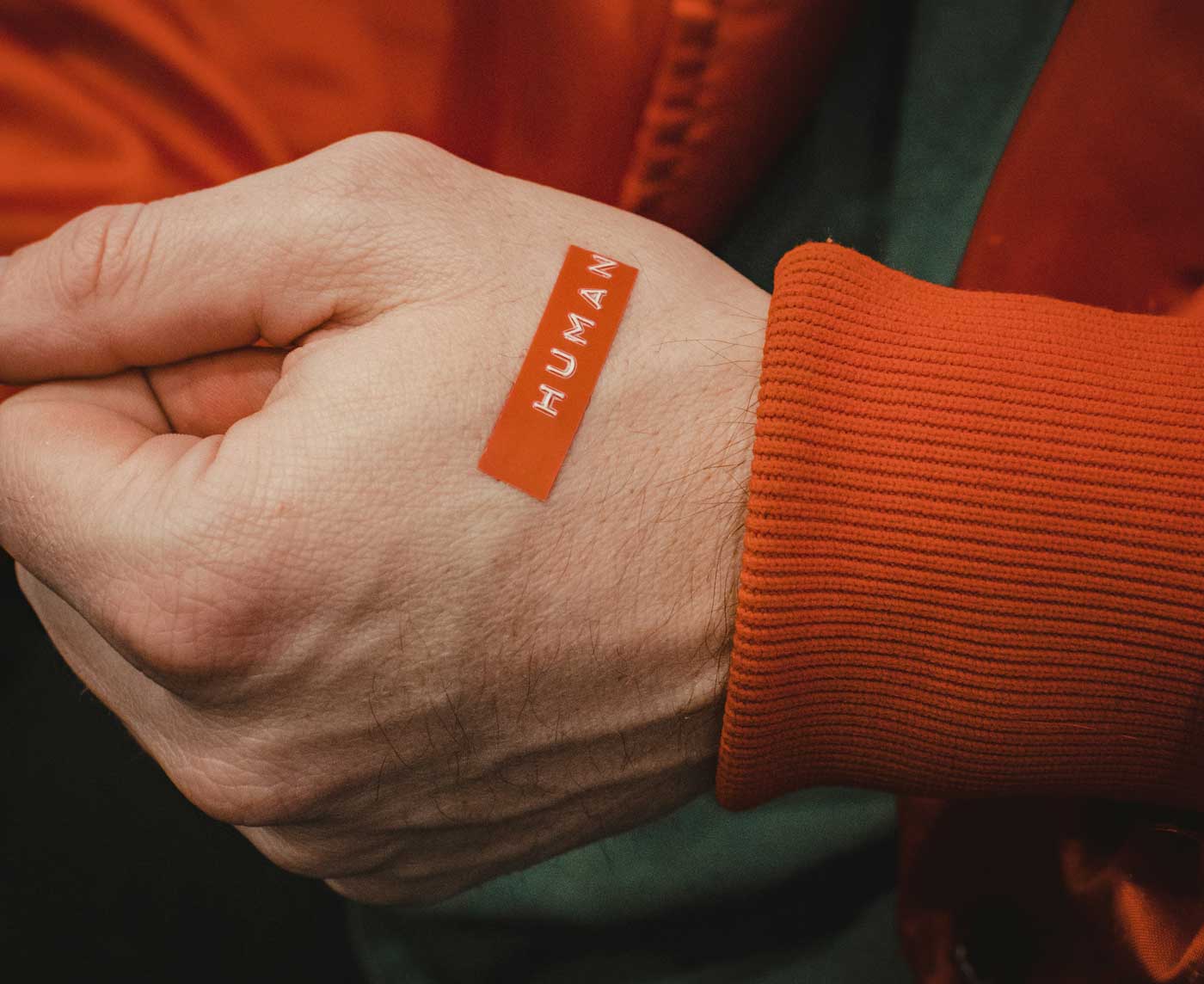

But saying “human” and understanding humans are two different acts. One is a posture you put on for the campaign deck. The other is how the business actually behaves after the campaign ends.
The first is fast and feels good. Anybody can do it. There’s no risk in saying you put people first. Nobody’s going to challenge you on it, and nobody’s going to remember the next morning whether you said it or not.
The second lives in every product decision, every customer interaction, every promise the marketing made that the work has to keep. Words and actions tied at the hip. You don’t say a thing you can’t do. You don’t make a promise you’ll break when no one’s watching. Customers are always watching. What they catch, sticks.
That’s why most don’t bother. Everything below is what doing it actually means.
Start here.
People don’t behave the way businesses prefer to model them.
That isn’t news. The industry priced in behavioral economics decades ago. Emotion became another variable to track, and sentiment became another input to optimize. Same machine, more variables.
The trouble is the machine itself. People aren’t a set of variables that resolve into a clean output. They’re a synthesis of contradictions happening at once, and the synthesis is where actual choice happens.
Consider what’s true of any person you know, including yourself.
You can want to be noticed and left alone in the same sentence. You can love someone and want to strangle them in the same conversation. You can buy the expensive coffee knowing the math doesn’t justify it, because today, f*ck it. That’s the person you want to be today. You can form a gut read on someone within seconds and turn out to be right, because your brain ran a cost-benefit analysis on hundreds of micro-cues faster than your conscious mind could follow.
This isn’t confusion. It’s paradoxical sophistication. It’s a person weighing multiple kinds of value simultaneously: identity, status, memory, mood, money, time, social signal, and future self. Most of it is below the level of articulation, and all of it is happening at the same time.
Here’s the part that matters most for anyone trying to build something useful.
Emotion runs upstream of logic. The decision happens before the decision. By the time someone reaches for a rationale, they’ve already chosen. Logic is mostly the editor that builds the case for what emotion picked, then files the receipt so the choice looks defensible in hindsight.
Watch yourself doing it sometime.
You’re shopping for a couch. You’ve been looking for weeks. You’ve narrowed it down to two models. You’ve researched them, compared them, decided in advance which one is the better choice. You walk into one more showroom on a Saturday morning to confirm.
Then you see a third couch. The one that wasn’t on your list. You stand next to it for twelve seconds. You lie on it for 4 minutes. Still telling yourself you’re going to be rational about this. Still building the comparison. By the time those 4 minutes are over, you’ve already chosen, and the next half hour with the salesperson is just you and your spouse and your inner monologue constructing the case that “we can make it happen” and “we’ll get rid of the recliner so it’ll fit”. You drive home with a delivery date and a story about how you made a careful decision.
The story is mostly true. The order is just slightly different than you think.
- Stimulus arrives.
- Emotional appraisal happens.
- Attention follows or doesn’t.
- Logical evaluation kicks in if attention held.
- Logic constructs a rationalization.
- Action follows.
That’s the actual architecture. Read it again. Notice what’s at the top.
Most brand work runs that architecture backward. It starts at logic and hopes feeling will follow. The order is wrong, so the work is, too.
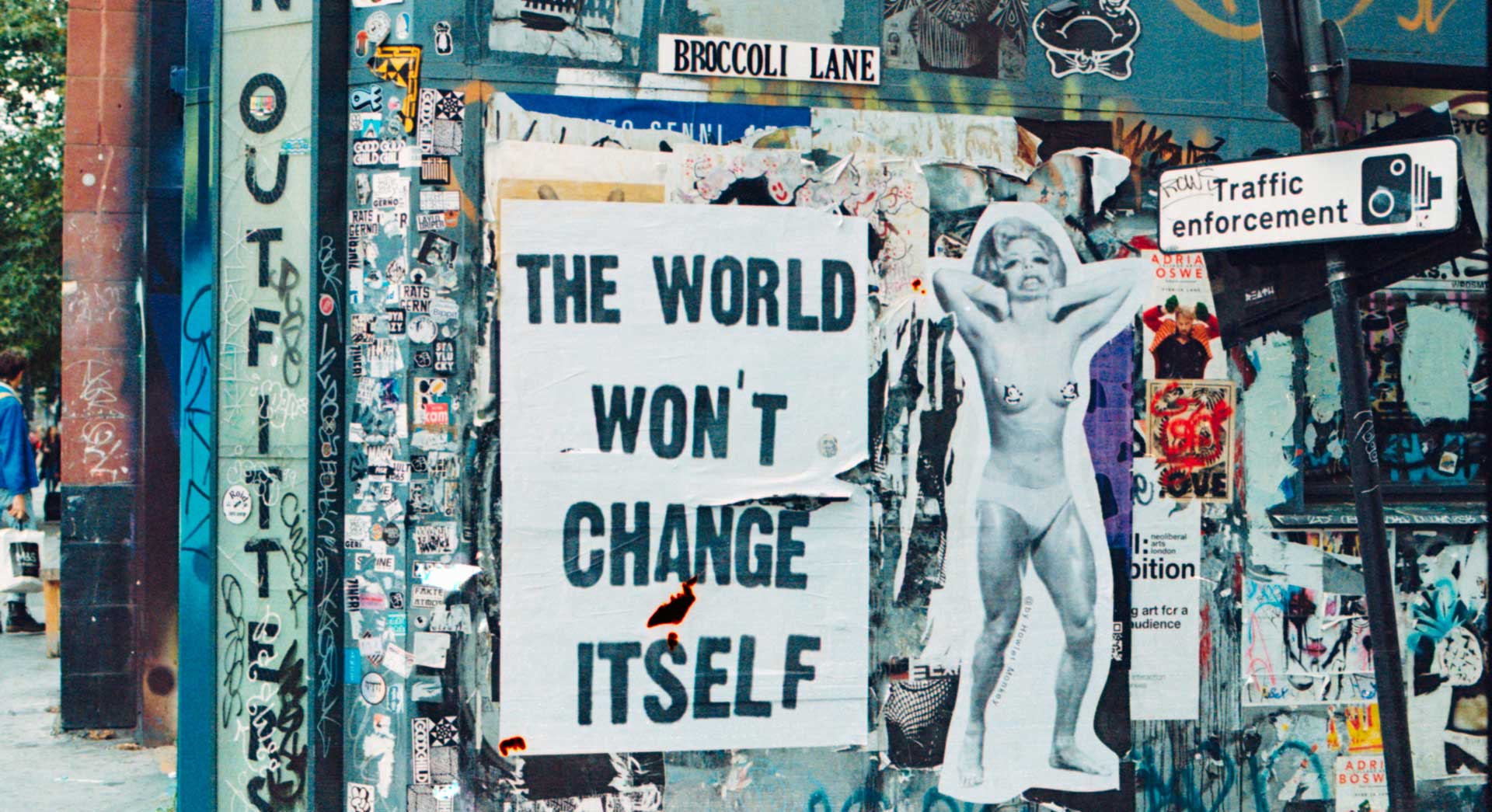
That’s the first thing we mean by human, and on its own it would already be more than most brand work tries to honor. There’s a second understanding underneath. You can’t honor the first without honoring the second.
The architecture explains how the decision happens, but it doesn’t explain what people choose.
Two products with identical features, identical price, and identical logical justification will still produce different responses. One feels like the right one. The other feels like the wrong one. Same engine, different result. The difference isn’t strategy. It’s character.
People aren’t generic. They aren’t even close.
Think about someone you love. Not what they do for a living. Not what they majored in. The actual specifics. The way they sit facing the door in restaurants, which you stopped noticing consciously but would notice immediately if they stopped. The story they’ve told you four times about the same vacation, slightly different every time, that you let them tell again because the way they tell it is the point. The bad movie they love unironically and will defend with their full chest. The fifteen-year grudge against a restaurant that doesn’t exist anymore. The word they say when something surprises them, their word, specific to them, the one nobody else uses quite the same way.
That’s a person. Vivid, contradictory, alive in ways no one asked them to be.
A persona document gives you a paragraph and a stock photo. A demographic gives you statistical neighbors. A spreadsheet gives you what they spent and when. None of it tells you about the bad movie or the grudge or the way they tell the vacation story.
Humans are wildly more interesting than the machinery built to describe us.
The texture is what gets lost.
Brands work the same way. Voice. Taste. Point of view.
The font choice that isn’t the default for your category. The welcome email that sounds like an actual person wrote it for fun. The product page that admits something most product pages would hide. Small choices that announce a particular sensibility instead of a category position.
This is the part of the work that resists abstraction. You can systematize a methodology. You can’t systematize being interesting. You develop the taste to recognize it, and the nerve to commit to it. Taste is identity made visible.
A brand that understands the cognitive part but skips the expressive part will be strategically sound and completely forgettable. A brand with expressive flair but no cognitive grounding will burn bright and fade.
And the air they breathe.
The mechanism explains how decisions happen. The texture explains who’s making them. Neither explains why the same person, given the same options, will choose differently in different moments.
There’s a third thing.
People don’t decide in a vacuum. They decide inside a field, and the field is always moving.
What’s happening in culture changes what feels right. What peers are doing changes what feels acceptable. What’s in the music, the art, the politics, the conversations at neighboring tables changes what feels possible. None of this is decorative. All of it is instrumental.
The complicated part: most people can’t tell you it’s happening.
Ask someone why they bought what they bought, and they’ll tell you about features and price. They’ll talk about the rational stuff because the rational stuff is what they can articulate. They won’t tell you about the cultural moment they were trying to belong to, or the social signal they were trying to send, or the version of themselves they were trying to feel like that afternoon. Not because they’re hiding it. Because they don’t know they’re doing it. The cultural field operates below the level of awareness for most of the people inside it.
This is deeper than the say/do gap. It’s the do/shaped-them gap. Strategy work that takes self-reports at face value misses the entire field of influence shaping the behavior it’s trying to predict. The work has to detect what people don’t know about themselves.
For brands, the cultural moment isn’t a backdrop. It’s a co-author. The same choice that felt aspirational in 2014 might feel tone-deaf in 2026, not because the choice changed, but because the room did. The slogans that once meant freedom now read as marketing. The visual styles that once felt fresh now feel like an attempt. Reading the field is part of the work, not a bolt-on. Knowing what time it is, culturally, is what separates a brand that lands from a brand that arrives a year early or a year late.
Knowing how people decide tells you how to reach them.
Knowing who they are tells you how to be worth reaching for.
Knowing what’s around them tells you when to show up.
What we’re up against.
This isn’t the work most of the industry is doing.
The default mode is faster. Templates are faster. Demographics are cleaner. Personas are tidier. AI-generated rationales are cheaper than research. Trend reports are easier than reading the room. The whole machine optimizes against the messy, contradictory, contextual specifics of being a person, because the messy stuff slows things down and doesn’t fit a quarterly review.
There’s a name for that machine. The Algorithmic Industrial Complex. The sea of homogeny it produces is the dominant aesthetic of the moment. The creative sucks and it falls on deaf ears.
Same hooks. Same fonts. Same earnest “we believe” statements. Same brand voice docs that read like every other brand voice doc. All of it operating as if the cultural moment were a backdrop instead of a co-author, and the individual a segment instead of a person.
Then everyone wonders why nothing they make moves anyone.
How we built it.
If this is what human means in the business-meets-brand world, here’s how we’ve built our approach around it. A few things, harder than they sound.
- We listen before we optimize. Most strategies measure what they’ve already built and call it research. We go earlier than that. Before the model exists. While we’re still capable of being surprised.
- We read the gap between what people say and what they actually do. People will tell you what they want and then choose something else. Both are real data. The space between them is where most of the truth lives.
- We refuse the persona shortcut. A persona document is a useful working hypothesis and a terrible answer. The moment it stops being a hypothesis and starts being the brief, you’re optimizing for a fiction.
- We hold emotion and logic in the same hand. Brand work that leans entirely into feeling becomes poetry. Brand work that leans entirely into logic becomes a spreadsheet. Neither moves people.
- We develop taste and commit to it. You can systematize a methodology. You can’t systematize a sensibility. Most brands sand off their edges trying not to alienate anyone and become nothing in particular. Specificity is the price of being interesting.
- We know what time it is. People don’t decide in a vacuum, and brands don’t speak into one either. The cultural moment is part of the brief whether or not anyone wrote it down. Work that ignores it ends up out of step with the people it’s trying to reach.
- We give it time. Real understanding of a person, a category, a moment takes longer than most briefs allow. There’s no fast version.
What we mean.
So when we say what we are, we mean something specific. Not the cosmetic version.
Human Response™ is the reaction we’re looking for. It’s the process we built around all three: the mechanism, the texture, and the field. How people decide tells us how to reach them. Who they are tells us how to be worth reaching for. What’s around them tells us how to show up at the right moment. The rest of this series will get into how it works in practice. What we do with it? What changes when you use it? What kinds of brands does it produce?
The word “human” will keep getting easier to say. We aren’t trying to win that argument. We’re doing the work the word actually requires.
That work is our company, Part Human. We are a human-centered brand strategy and creative agency for businesses bold enough to be honest in a world that’s forgotten how.
More on how Part Human runs in the pieces coming next.
You can follow us on LinkedIn and Instagram. You can also dig in and see how we roll at parthuman.co
If you’re already on board, let’s chat. It all starts with a discussion.
parthuman.co/contact
– – – – – – – –
About this Substack. Proof of Life is our space to think out loud. The patterns, the misses, the breakthroughs, the rants. The brand stuff most agencies are too polite to say. If you build brands, lead them, or care about how they get built, we made this for you. Subscribe and we’ll send the next one to your inbox. Buckle up. We’ve got a lot to say on the matter.